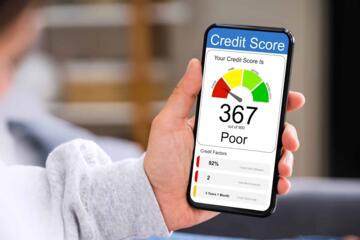
The Credit Score Maze
Navigating the consumer credit landscape requires an understanding of algorithmic risk assessment. For the millions of Americans planning major purchases like a home or a vehicle, a FICO score isn't just a number; it dictates the cost of capital. A difference of 50 points can manifest as tens of thousands of dollars in excess interest over the life of a 30-year fixed mortgage.
According to data from the Federal Reserve, structural misconceptions about credit reporting models cause consumers to take actions that inadvertently suppress their scores. Many individuals operate on outdated advice, relying on conventional wisdom that contradicts the mathematical realities of modern scoring systems like FICO 8, FICO 9, and VantageScore 4.0.
To optimize your financial profile, you must treat your credit report as a data science ledger rather than a emotional scorecard. Misunderstanding how proprietary algorithms evaluate debt, payment history, and credit inquiries leads to strategic errors that directly inflate borrowing costs and delay wealth accumulation.
The Cost of Ignorance
The primary issue with credit myths is that they prompt well-intentioned consumers to micro-manage their accounts in ways that look high-risk to automated underwriting software. Credit scoring agencies like Experian, Equifax, and TransUnion do not measure "financial responsibility" in a moral sense; they measure statistical probability of default.
When a consumer acts on a myth—such as carrying a small balance to "show activity"—they are operating under a fundamental misunderstanding of the system. This specific error does not build credit; it simply transfers capital from the consumer to the card issuer via compounding interest charges, often exceeding 24% APR in the current macroeconomic environment.
The consequences of these misconceptions are tangible. Sub-optimal credit scores lead to higher insurance premiums, larger utility deposits, and outright rejections from prime lenders. In an era where algorithmic underwriting dominates the financial sector, operating under flawed assumptions creates an invisible tax on your net worth.
Five Credit Myths Debunked
Carrying a Monthly Balance Builds Credit
The belief that you must pay interest to improve your credit score is entirely false. Revolving credit utilization is calculated based on the balances reported to the bureaus at the end of your billing cycle, not whether you carry that balance over to the next month and incur interest charges.
In practice, paying your statement balance in full every month before the due date satisfies the positive payment history metric, which accounts for 35% of your FICO score. It also keeps your utilization low without costing a single dime in interest payments to institutions like Chase or American Express.
Closing Old Accounts Cleans Your Profile
Many consumers close credit card accounts they no longer use, thinking it streamlines their profile. This action often causes immediate damage to two critical scoring metrics: the average age of credit history (15% of FICO) and the overall available credit limit, which instantly spikes your credit utilization ratio.
When you close an account with a $10,000 limit, your total available credit across all cards shrinks. If you owe $3,000 on other cards, your utilization ratio rises, signaling increased risk to lenders. Instead, keep zero-balance cards open, using them occasionally for small purchases to prevent the issuer from closing them due to inactivity.
Checking Your Own Credit Lowers the Score
The fear of monitoring your own credit report stems from a confusion between hard inquiries and soft inquiries. Soft inquiries occur when you check your own score via services like Credit Karma, or when a landlord performs a background check. These inquiries have zero impact on your credit score.
Hard inquiries occur only when you formally apply for financing, such as a mortgage with Rocket Mortgage or an auto loan with Capital One. These stay on your report for two years but only impact your score for 12 months, usually deducting fewer than five points per inquiry for a standard prime borrower.
Income and Net Worth Dictate Your Score
A common misconception among high earners is that a large salary automatically guarantees a prime credit score. Credit bureaus do not track your income, your checking account balance, or your investment portfolio. A person making $500,000 can have a 550 score if they are chronically delinquent on bills.
The scoring algorithm focuses entirely on how reliably you manage borrowed capital. A consumer making $45,000 a year who maintains flawless payment history and low utilization will consistently outscore a wealthy individual who treats credit limits carelessly, proving that cash flow does not equal creditworthiness.
All Credit Scoring Models Are Identical
Consumers often get frustrated when the score they see on a free app doesn't match the score a lender pulls. This occurs because there are dozens of different credit scoring variations optimized for specific industries. Auto lenders utilize FICO Auto Score 8 or 9, while mortgage underwriters rely on older versions like FICO 2, 4, and 5.
Furthermore, VantageScore uses a distinct algorithm that weights factors differently than FICO. For example, VantageScore penalizes late payments more heavily but ignores collection accounts once they are paid in full. Understanding that you have multiple scores prevents surprises during a formal underwriting process.
Real Financial Implications
Consider a retail buyer, Sarah, who wanted to buy a home. She had a 740 credit score but decided to close two old retail credit cards she hadn't used in three years, believing it would look better to mortgage underwriters. This action reduced her average age of credit from seven years down to four years.
Consequently, her FICO score dropped from 740 to 695 right before she locked in her mortgage rate. On a $400,000 conventional loan, this drop pushed her from the prime tier to a lower tier, increasing her interest rate by 0.5%. Over the course of the loan, this single mistake cost her more than $43,000 in extra interest.
Conversely, data shows that borrowers who aggressively manage their reporting dates—paying balances down before the statement closing date rather than the payment due date—can artificially suppress their utilization ratio, boosting their scores by 20 to 30 points within a single 30-day reporting cycle.
Scoring Models Breakdown
| Metric | FICO Weight | Vantage Weight | Core Focus |
|---|---|---|---|
| History | 35 percent | 40 percent | On time bills |
| Amounts | 30 percent | 20 percent | Utilization |
| Age | 15 percent | 21 percent | Account depth |
| Mix | 10 percent | 11 percent | Loan variety |
Avoid System Pitfalls
To avoid damaging your score, establish an automated system for balance payments. The single most effective action you can take is setting all recurring credit cards to "Auto-Pay Statement Balance." This guarantees you never miss a due date while completely avoiding interest costs.
Additionally, optimize your credit utilization ratio by keeping it below 10%, rather than the frequently cited 30% rule of thumb. The 30% figure is a failing grade in high-tier underwriting. True prime borrowers maintain a single-digit utilization profile across all active lines of credit.
Finally, utilize tools like Experian Boost with caution. While adding utility or streaming service payments can marginally lift a thin credit file by a few points, sophisticated institutional lenders frequently strip out these non-traditional data points when pulling raw data for mortgage or auto loan underwriting.
FAQ
Does debit card use build credit?
No, debit cards pull directly from your checking account and do not involve borrowed capital. Because there is no line of credit extended, banks do not report debit transactions to Equifax, Experian, or TransUnion. To build credit, you must use a credit product.
How long do collections stay?
Legally, negative information such as collection accounts, late payments, and repossessions can remain on your credit report for up to seven years from the date of the original delinquency. Chapter 7 bankruptcies can remain on your credit report for up to 10 years.
Can paying a debt drop your score?
Yes, occasionally. If you pay off an old, inactive collection account, the sudden update in status can cause the algorithm to re-categorize the debt as recent activity. This glitch can cause a temporary score drop, though the long-term profile health improves.
Are store cards good for credit?
Store cards can help build credit because they report to the major bureaus, but they often carry low limits and exceptionally high interest rates. A low credit limit makes it very easy to accidentally spike your utilization ratio with just one or two standard purchases.
How often do scores update?
Credit scores update roughly every 30 days, coinciding with when financial institutions transmit user data to the bureaus. Because different cards have different statement closing dates, your score can fluctuate slightly throughout the month as new data aggregates.
Author's Insight
During my years advising clients on debt optimization, I have seen brilliant professionals cost themselves thousands of dollars by treating credit scores like a game of intuition. The algorithm is cold, predictable, and devoid of nuance. I personally keep accounts open that I haven't used in a decade simply to preserve my credit depth. Stop trying to outsmart the system with short-term maneuvers; automate your statement payments in full, keep your balances low, and let time do the heavy lifting.
Summary
Maximizing your financial leverage requires discarding outdated credit myths and managing your profiles based on algorithmic logic. Never carry a balance for the sake of it, keep your oldest accounts active, and monitor your score through official channels without fear. Reclaiming control over your utilization metrics and ensuring pristine payment history are the most immediate, actionable steps you can take to unlock premium interest rates and secure your financial future.